
Industrial
Manufacturing
distribution
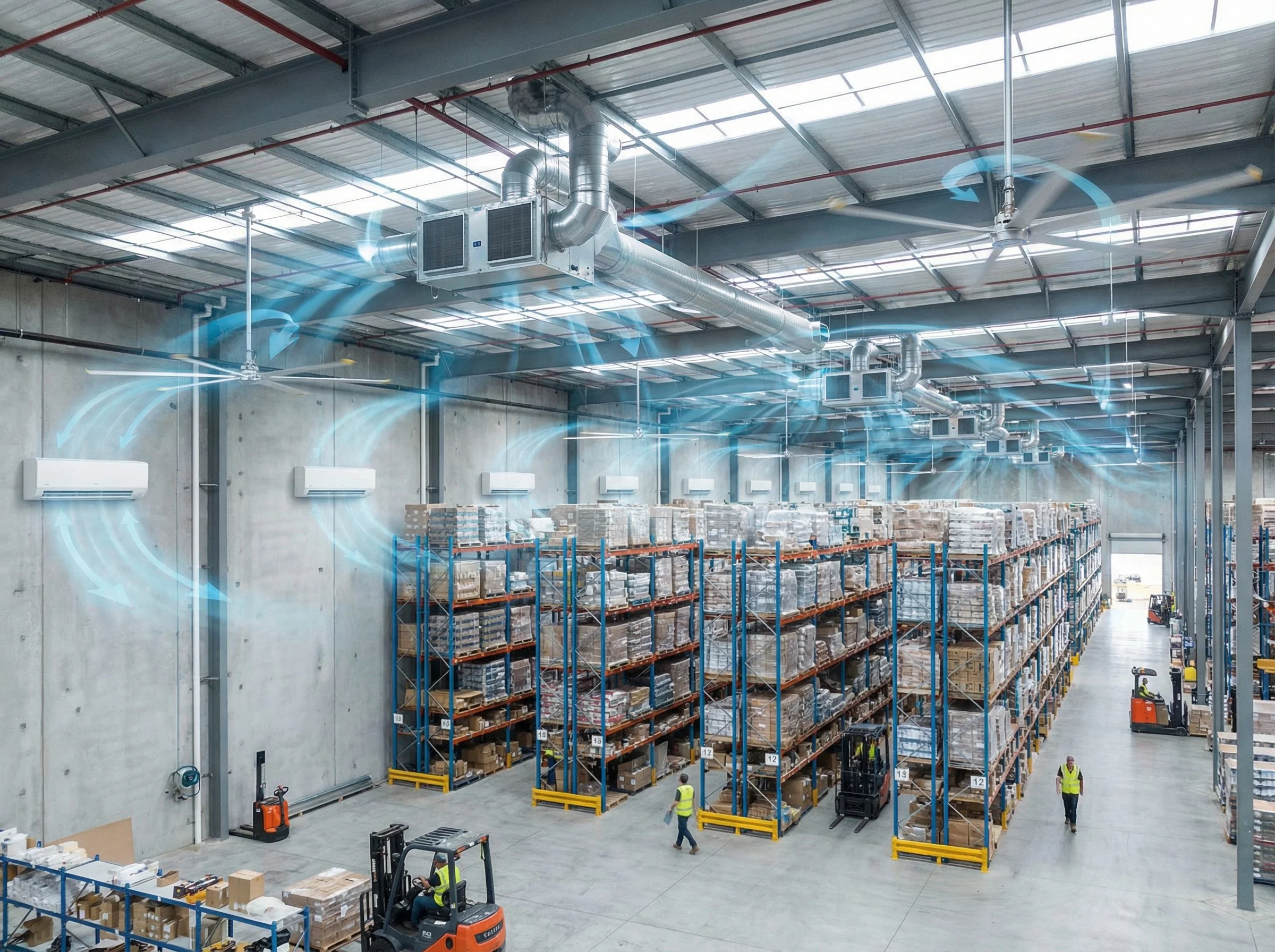
Manufacturing facilities, distribution centers, warehouses and industrial facilities face a wide range of challenges regarding HVAC system design, installation and maintenance, due to their size, complexity, and the specific environmental, safety and air quality conditions they must maintain. You must protect your machinery and products from the dangers associated with high humidity or temperature extremes.
Learn how AIRPROS addresses these challenges by watching this video and scrolling down for more information.
AIRPROS would welcome the opportunity to respond to an RFP and work on your Industrial, Manufacturing, Warehousing HVAC project.
Please complete the form below; an AIRPROS representatives will quickly respond and schedule a followup call or meeting.

T: 516-427-3983
E: info@airprosny.com
Large Spaces With Diverse Requirements
Manufacturing facilities often consist of huge spaces with different areas, each requiring unique environmental conditions. For example, one part of your facility might need to maintain a cool, dry environment to protect sensitive goods. Another section may require a humid atmosphere for specific manufacturing processes. It can be challenging to manage these diverse requirements across your manufacturing facilities with centralized HVAC systems. The good news is that there are plenty of solutions.
Consider using zoning systems that allow you to independently control the temperature and humidity in each part of your facility. Advanced HVAC controls like programmable thermostats and building automation systems (BAS) can help you maintain the specific conditions required in each zone while also optimizing energy use.
Keep in mind that there isn’t a distinct zone for every area of your facility. You can combine adjacent spaces into a single zone, assuming they require the same temperature and humidity thresholds. For instance, suppose your manufacturing facilities include an office area that is closed off from the production floor. To simplify system management, you could put all of the offices in a single zone.
Dust and Debris
Industrial facilities tend to generate a lot of dust and debris. These contaminants can quickly clog your filters and damage system components. In turn, your system can become less efficient and be more prone to breakdowns. Dust is far from the only airborne contaminant your manufacturing facility needs to be concerned about, though. Researchers examined over 2,100 industrial facilities and studied the number of carcinogens they emit. Cumulatively, these facilities emit roughly 11 million pounds of carcinogens annually.
Despite so many contaminants, you can rely upon AIRPROS to regularly swap out filters and use high-end filtration systems, thereby ensuring optimal air quality and safety.
High Energy Consumption
For most manufacturing facilities, the HVAC system represents one of the biggest sources of operational expenses. These systems consume a ton of energy and can drive up overhead costs if the equipment is not functioning properly. You must continually monitor your system’s performance and be cognizant of any efficiency issues. If your cooling-related operating costs rise unexpectedly, it’s important to determine why and fix the problem as soon as possible. Energy-efficient HVAC equipment like variable speed drives (VSDs) can reduce energy consumption. These upgrades allow your system to adjust its output based on demand. That way, they aren’t at full capacity all the time.
Additionally, a preventive maintenance program can help keep your system running at peak efficiency. Partner with a commercial HVAC provider like AIRPROS to take advantage of our preventive maintenance program. Our team can conduct regular inspections and tune-ups to maximize the lifespan and performance of your heating and cooling equipment.
Temperature Control
One of the biggest HVAC-related hurdles you can face involves maintaining a consistent temperature across all areas of your facility. You must keep work areas cool enough to minimize the risk of heat-related ailments and fatigue. However, you must also ensure that temperatures remain within safe thresholds to prevent product damage. Wild temperature variations can make life hard on your team. These shifts may also lead to equipment malfunctions or increased wear and tear on machinery.
AIRPROS can configure sophisticated temperature monitoring technology that enables your HVAC equipment to stay within ideal thresholds at all times. These systems also provide you with real-time data on temperature and humidity levels throughout the facility. Use them to detect deviations and prevent issues from impacting your operations.